Saturday, June 15, 2019

San Pedro de Atacama........southbound into thinner air

From high above Tuyactu Lagoon
Sometimes when we travel we plan out a pretty detailed itinerary.  Sometimes we have a general idea of what we want to see and do.  Other times we just know where we're going to be laying our head at night and plan the rest once we arrive.  In the case of this Chilean adventure the only thing planned ahead was where we would be laying our head.  As fate would have it, this has worked out perfectly for our time in San Pedro de Atacama.  When we checked into the hotel, Kate, our friendly host here at the Planeta Atacama, handed us a well thought out five day itinerary.  She shared with us that Juan, the owner of the lodge had a background as a tour guide and had put together a very useful guide for procrastinating planners like us to follow.
The plan started with a few activities close to town.  These allow for guests who aren't used to the altitude to get acclimated before heading off in various directions further from town and often in higher altitudes.  Having now had close to 48 hours to get acclimated, with only minor headaches the first morning, we were ready to tackle a bit more adventure.  Todays itinerary was listed as "Going South to the Altiplanic Lagoons".  These lagoons are located about 60 miles south of San Pedro de Acatama.  It was an incredibly scenic drive along Ruta (Route) 23, which is the international road leading to Argentina. The Andes Mountains are on one side and the Atacama Salt Flat is on the other side.
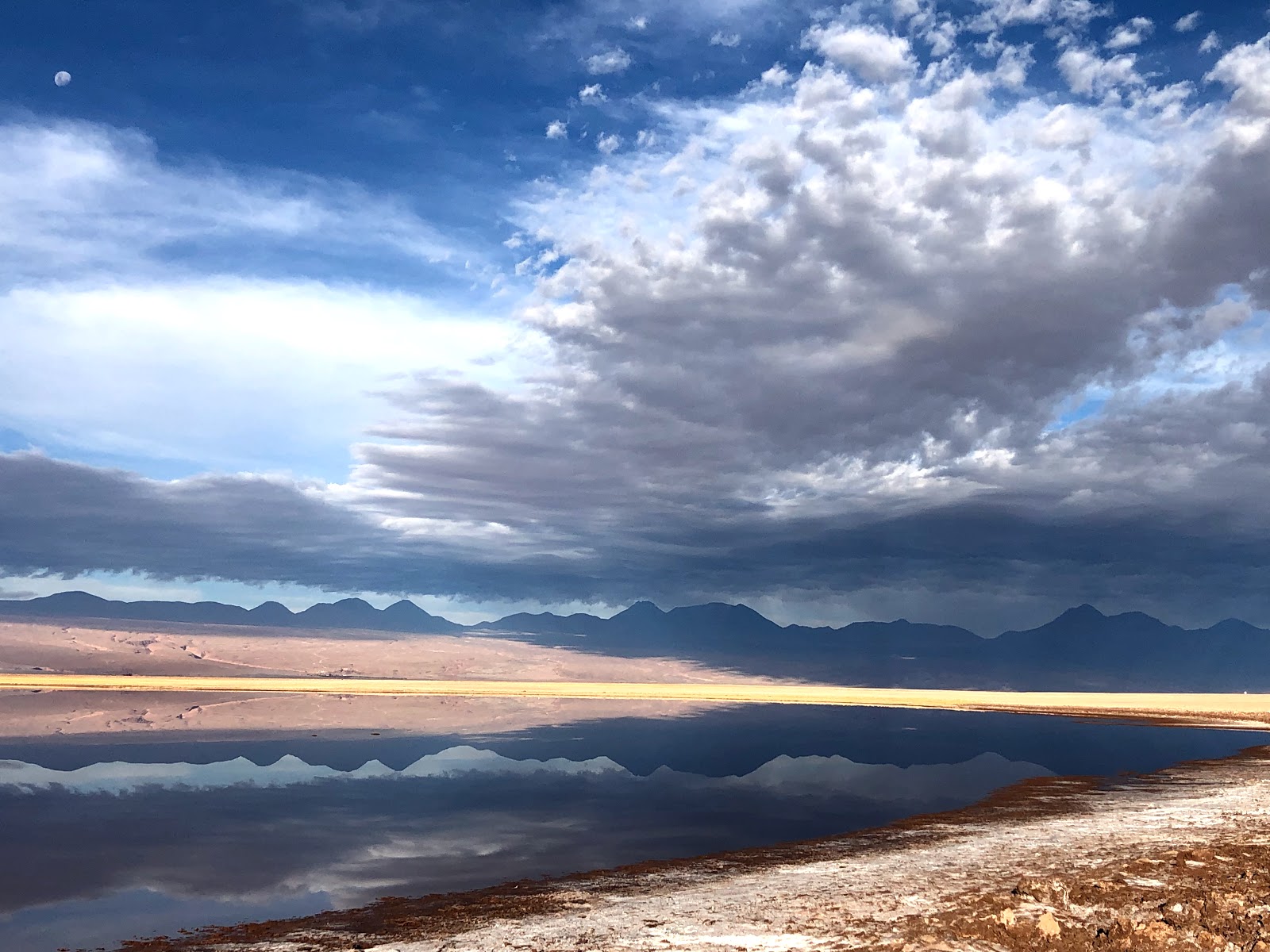
Our first stop was actually in the middle of the Atacama Salt Flat at the Chaxa Lagoon.  The water in the lagoon has a very high salt content with crusts of salt along the waters edge.  It is also the home to numerous birds species, including three types of flamingos.  I'm not sure if we saw all three types but we did enjoy watching them with their unusual feeding methods  (head underwater, turning in circles, stirring up whatever small creatures were living on the bottom) enjoying an early morning meal.  Occasionally they would move from one feeding spot to the other, flying directly over us.  We also enjoyed taking in the 360 degree vastness and peacefulness of the mirror like surface of the water and salt flats with the Andes Mountains in the background.


It was tough to leave the Chaxa Lagoon but there was much more to see and do.  As we drove further south we passed the Tropic of Capricorn.  This is the southern most latitude where the sun is directly overhead.  This occurs here during the December Solstice, which in the Southern Hemisphere is the day with the longest amount of time between sunrise and sunset.
We were also treated to a great wildlife show along the way.  We saw Llamas, Burros, Vicunas and the best sighting of the day, an Andean Fox.  The vicunas and the fox blended in perfectly with the colors of the landscape.  Often times we would think there were just a couple of vicunas,  but as we'd slow down and they started moving, there would be a dozen or more.  I have no idea how Beth spotted the fox, but we enjoyed a quick glimpse before he scurried away.  He was too fast for us to get a picture but I did find a nice photo online that is included below.
There was a small group of four llamas that we had to stop for so they could cross the road.

The well camouflaged vicunas

I guess this guy was wanting to play a game of "King of the Hill"

Burros


We didn't get a picture of the Andean Fox we spotted.  I found this photo on line.

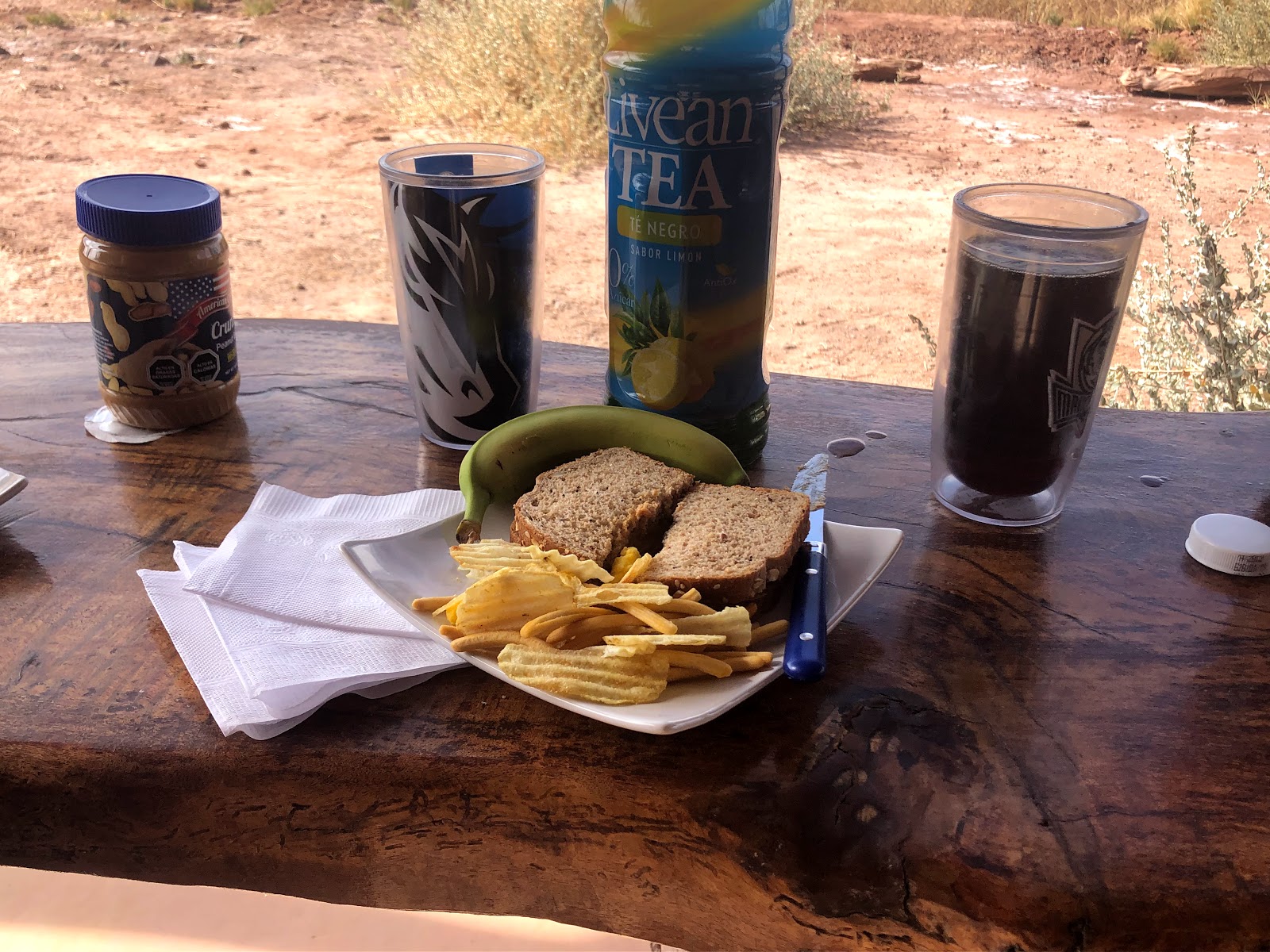
After we passed the small village of Socaire we really started to climb into the mountains.  Our turnaround point was at the Tuyactu Lagoon.  This high altitude lagoon is fed by snow melting from the surrounding mountains.  We were now at an altitude of close to 15,000 feet above sea level.  The temperature had dropped dramatically.  It was windy and very overcast.  The park ranger came to us and told us the trails were closed.  We believe they were closed due to the possibility of snow.  We weren't tempted to spend too much time outside the car taking pictures.  What we did enjoy was a picnic(yes, peanut butter sandwiches) while taking in the scenery from the cozy confines of our Chevrolet Onix!
On the way back we made one final stop at the Miscanti and Meniques Lagoons.  Reaching these lagoons meant about a 20 minute ride down a very bumpy, unpaved side road.  As with everything we had seen along the way, the views were spectacular.
The salt flat and Andes Mountains


Laguna Miscanti

For a desert there sure are a lot of lagoons


We made our way back to town around 4:30.  I'm happy to report that there were no issues with the high altitudes.  We continue to follow Kate's advice to drink more water than you think is possible.  Good advice for minimizing the risk of altitude sickness and a great way to flush out your kidneys!

Friday, June 14, 2019

Ojas del Salar and Tebinquiche Lagoon.........the real deals!

Tebinquiche Lagoon
Before diving into the details of our afternoon I'd like to give you a little insight into the roads and driving conditions of the area.  The road from Calama to San Pedro de Atacama was a very nice, paved two lane road.  There was a little bit of traffic, but not much.  The only hold ups along the way were on a couple of uphill sections that large trucks were struggling to climb.  Because of the minimal oncoming traffic these were easy to get around.   Most of the local roads we have been on are unpaved and quite bumpy.  When we picked up our rental car at the airport we were a little surprised at it's condition.  There was a large dent in the rear passenger door and no hubcaps on the wheels.  After just one day we realize that it looks pretty similar to many other rental cars.  We're also glad they didn't give us a spiffy new one, because they sure take a beating out here.


After resting up from our Moon Valley expedition we were off for a late afternoon adventure.  This time we were in search of water.  We were hoping to find the real thing and not just mirages in the desert!
About 16 bumpy miles outside of San Pedro de Atacama we found some interesting bodies of water, Ojas del Salar (Eyes of the Salar) and Tebinquiche Lagoon.  The Ojas del Salar is actually two small lagoons, one on each side of the road. which make them look like blue/green eyes.  The water which has a very high salt content is also very clear and very deep. I didn't stick my toes in it, I'm sure it was also quite chilly (pun intended).  Just a mile or so further down the road is the much larger Tebinquiche Lagoon.


From a scientific standpoint, these bodies of water are very important.  They are one of only three places on the planet where certain single celled organisms can be found.  These organisms closely resemble what were believed to be the first organisms to release carbon dioxide into the atmosphere.  This was the start of the build up of the protective ozone layer in the atmosphere.  
From a less scientific standpoint, they are popular late afternoon spots for watching the sunset over the mountains, as well as seeing flamingos that call the lagoon home.  The sunset show was spectacular.  The calm, mirror like surface of the water at both places gave Beth the opportunity to take some great pictures with reflections.  We didn't spot any flamingos.  I guess they were enjoying the last bit of daylight wherever they hang out during the day.


As we made our way back along the bumpy road we were a little concerned that we had lost our GPS signal.  Visions of spending the night in the desert was a little more adventure than we had planned on.  Thankfully after a few minutes we recaptured the signal and bounced along happily the rest of the way back to the lodge.

Searching for my GPS signal


Thursday, June 13, 2019

San Pedro de Atacama and the Moon Valley

Howdy from the Moon!
Hola from San Pedro de Atacama, Chile!  We'd like to say a special hello to our favorite person of Chilean descent, Alonzo, who is a very close friend of Sarah.  Hopefully that makes him our friend too.
We arrived in San Pedro de Atacama yesterday (Wednesday) afternoon around 3:30 PM.  The journey included a flight from Tampa to Miami, then Miami to Santiago, followed by one more flight, Santiago to Calama.  From Calama it was a short and easy hour and a half drive to our first destination on this adventure.
San Pedro de Atacama is a town of around 4,000 people, located in Northeastern Chile.  It sits on a plateau in the Andes Mountains and is an oasis in the desert, complete with trees and shrubs.  The areas surrounding the town have volcanos, salt flats, geysers and hot springs.  It has become a popular destination in recent years for travelers that enjoy hiking, biking, stargazing and outdoor activities.  Last year the city played host to around 180,000 visitors.  Of course I learned about it from my source of all things travel related, Beth!
We are staying at the Planeta Atacama, which is a really cool 5 room lodge on the outskirts of the city.  When we arrived we were greeted by Kate, who is originally from France.  She was incredibly helpful in getting us oriented, not only to the lodge, but also to some of the activities that we might be interested in during our five night stay.  Even though it's early in our stay, we've already taken advantage of a couple of her recommendations and they have been excellent!
The Planeta Atacama-The "Community/Breakfast Room" is on the right.  Our room is the first one on the other side of it.

The view from our room.  Across the plateau is the Licancabur Volcano

My blogging office for the day...……….

also our picnic table.

Our very traditional picnic feast.  Peanut Butter Sandwich, Chips and Banana

One other thing that is important to point out about San Pedro de Atacama is the elevation.  As I mentioned earlier, it is located on a plateau in the Andes Mountains and is 7900 feet above sea level.  While this certainly isn't real high, it's about 7895 feet higher than we're accustomed.  We knew we'd be taking it easy the first 24 hours while getting acclimated.
Once we were settled in we did drive into town around sunset for a leisurely stroll around and to get a bite to eat.  At Kate's recommendation, we enjoyed sharing a meal at a local traditional restaurant called Las Delicias de Carmen.  She had warned us that the portions were huge, so we shared one meal of pork chops, sautéed potatoes, salad and bread, which was plenty.
Downtown San Pedro de Atacama at sunset


We both slept well, however, we both woke up this morning with slight headaches.  You may be thinking too much wine, but that's not the case.  No wine was consumed.  It was most likely a result of too little oxygen.  The lodge anticipates that some folks might have issues with the altitude so they provide the local remedy, coca tea.  After a cup we were both feeling better.  We were the only ones staying at the lodge last night (other guests will be here today) but the breakfast was large enough that it could have accommodated a "full house".
After eating we headed out for our first bit of exploring the area.  Although it was only a fifteen minute drive, it was like we were suddenly transported to another planet, the moon!  The Valle De La Luna (Valley of the Moon) is a collection of colorful rock formations that could easily be used as the backdrop for any movie requiring a setting on the surface of the moon.  The small admission price of around $3.00 US that was well worth it.  We enjoyed several hours of driving the unpaved road, as well as exploring several of the numerous trails that wound up, over and around the formations.
Here are some pictures from our morning adventure...……….


What looks like frost or snow is actually salt deposits


Some of the many "hoodoo's" caused by erosion

This hoodoo is call the Tres Maria's-the Maria on the left has fallen over

Yes, there are some clouds, but it's not going to rain!


Adios for now!


Saturday, June 8, 2019

Up next: The Extremes.........extremely dry, extremely remote and extremely shaky!


We're getting a few drops of rain out on Anna Maria Island as I am starting this blog.  By a few, I mean not even enough to completely wet the driveway.  Our next adventure is going to take us to a place where this much rain would actually be considered a torrential downpour.  Where we are going there are weather stations that have never recorded a drop of rain for as long as records have been kept.  Our destination is Chile. One of the places we will be visiting is the Atacama Desert.  This 41,000 square mile desert in northern Chile is considered by many to be the driest place on earth (*some folks claim that the polar regions are "drier", but I'm not really sure how you can be drier than zero precipitation).  In addition to the Atacama Desert, we'll be visiting Easter Island and the nations' capital and largest city, Santiago, on our seventeen day South American adventure.
Probably the first question that will pop into most people's mind is simply, why?
I'll start with why Chile and then get more specific on the three destinations we have selected.
We've spent a little time in Chile previously and really enjoyed it.  We wanted to go back for a more in depth look around this long, narrow country that is home to just over eighteen million people.  It seems as if South America is frequently forgotten about by North Americans when booking overseas travel.  Just like any other continent, there are places you will want to avoid. But there are also amazing places to see in South America, and Chile is the home to many of these places.  It is a very modern country with a high literacy rate (96%), and crime rates that we only wish we could have here in the US.  Travel to, and within the country is fairly affordable, especially at this time of year because it is winter in the Southern Hemisphere.  The food, which typically comes from a Spanish background is outstanding, with empanada's, stew's, bar b q and of course the most authentic Chilean Sea Bass on the planet. Finally, we've crossed a lot of time zones the past few months and although it's a long flight, Chile is in the same time zone as Florida.  This makes the transition to and from the country much easier.
Chile has quite a unique shape, very long and very narrow.  From north to south it covers 2,653 miles but from east to west it averages only 110 miles in width.  It is diverse as it is long, with outstanding beaches, a significant wine region, snow capped mountains and fjords, lush forests and of course the desert.  We chose the Atacama Desert for several reasons.  Although it is a desert, it is supposed to be incredibly beautiful in it's own unique way.  Surprisingly, we've learned that in spite of the lack of rain there are a number of animals and plants that thrive here.  Much of the landscape is studied by scientists hoping to gain an insight on what the surface of Mars might be like.  There are also geysers and hot springs to enjoy.  The temperatures at this time of year will be moderate, ranging from highs in the mid-70's during the day to low's in the upper 30's at night.  These temperatures along with humidity levels of less than 10 percent will be a welcome relief.  In Florida the high's have been in the 90's already with humidity levels in the 80% range.  The Atacama is also known for it's night sky.  There are over 300 cloudless nights per year, which combined with minimal light pollution makes for great star gazing.  One last thing, being light packers, we won't need to overly concern ourselves with rain gear for this part of the adventure.
Atacama Desert
The Night Sky in the Atacama Desert
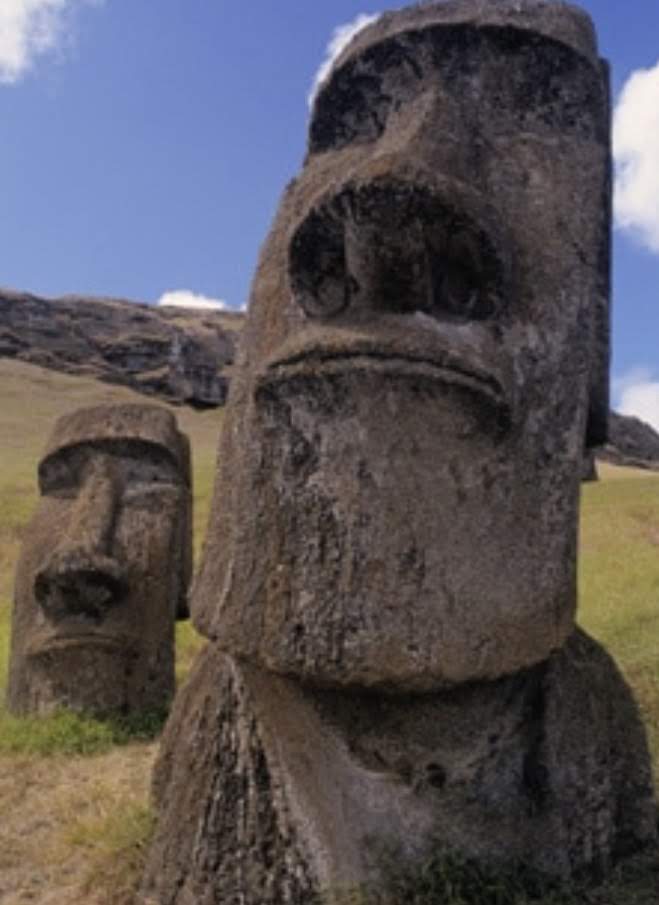
Once we leave the Atacama we'll be heading to a place listed as one of the ten most remote places to live on earth, Easter Island.  Easter Island is a part of Chile, however it's a few miles away from the mainland. 2,330 miles to be exact!  It is a Polynesian Island, that along with the Hawaiian Islands and New Zealand make up what is known as the Polynesian Triangle. There are about 5,000 people who call Easter Island home. They have approximately 100,000 visitors per year.  The main attraction of the 63 square mile island are the more than 900 carved human figure statues that were built between the 13th and 16th century.  Although the exact reason they were built is not known, it is widely believed that they were built by the inhabitants of the island as protection from explorers.  Which makes it ironic that they are now the reason people want to visit the island.
Easter Island
We'll finish up our time in Chile with a couple of days in the capital city of Santiago.  This city has a metropolitan area population of over five million and is surrounded by the Andes Mountains.  It's a very modern city with a deep, rich history.  It is known for it's numerous museums, historical landmarks, markets and lively neighborhoods, such as, Bellavista, San Cristobal and Lastarria.
Santiago, and the surrounding area, is also known to be rather shaky at times.  On May 22, 1960 the area recorded the highest magnitude earthquake ever recorded.  It measured 9.5 on the Richter Scale and prompted significant changes in building practices.  These changes have resulted in Santiago having some of the highest earthquake resistant building code standards in the world.   Hopefully these standards don't get put to the test anytime in the future!
Santiago
We'll be heading out Tuesday evening with an overnight flight from Miami to Santiago, and then on to the Atacama Desert.  One thing we're not certain of is our internet access while in the Atacama or on Easter Island.  I look forward to sharing our experience as often as possible.